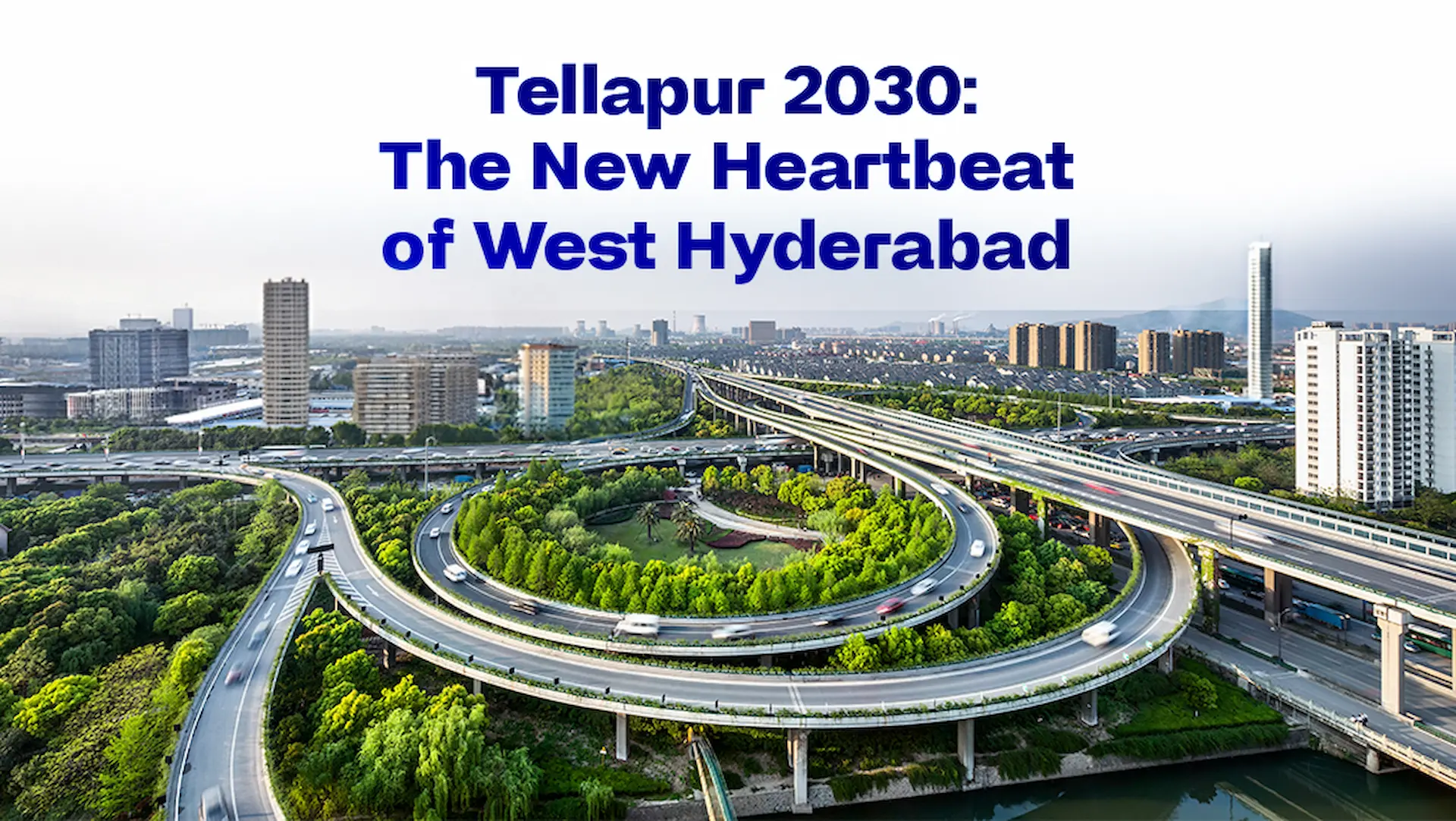
If there’s one suburb that has quietly outpaced its reputation, it’s Tellapur. For years, this patch of land between the Financial District and Osman Nagar sat in the shadow of its louder cousins, Gachibowli and Kokapet. Today, it’s the name that appears in every serious Hyderabad real estate discussion.
Tellapur’s transformation isn’t accidental. It’s structural, planned, and long overdue. A decade ago, this was a peripheral suburb with potential; now, it’s an urban extension with performance. The metro expansion is underway, service roads along the radial corridor are functional, and community life is taking shape. What were once barren plots are now addresses with names, and often, price tags that make early investors smile.
In the last 5 years, Tellapur’s growth curve has been steady, not speculative. That’s what sets it apart. In a city where micro-markets often rely on hype cycles, Tellapur has built its rise on fundamentals — connectivity, infrastructure, and livability.
The Infrastructure Advantage
The Outer Ring Road put Tellapur on the map, but the upcoming radial road network is giving it definition. Add to that the direct access to Nanakramguda and Gachibowli, and you get a suburb that connects faster to the city’s pulse than even some “core” localities. For professionals working in the IT corridor, it’s proximity without congestion — the rare combination every urban family seeks.
But Tellapur isn’t just an address for convenience; it’s becoming a lifestyle choice. The new gated communities here are self-contained ecosystems — high-rises with clubhouses, landscaped decks, co-working zones, and retail spaces that make weekday living surprisingly pleasant.
From Layouts to Livability
Reliable water supply, planned drainage, and road width that actually accommodates two-way traffic — it sounds basic, but in Hyderabad, it’s a privilege. Tellapur has benefited from early civic foresight. Add international schools, healthcare centres, and supermarkets that cater to the global workforce, and you get a suburb that feels less like an outpost and more like a neighbourhood.
The social fabric is forming fast. Morning joggers, weekend cyclists, and children playing in traffic-free zones — the small but telling signs of a community finding rhythm.
Why Tellapur Now
For both investors and end-users, Tellapur represents maturity. The smart capital — those who track absorption trends and infrastructure pipelines — has already arrived. What’s unfolding now is end-user migration: families choosing stability over speculation.
By 2030, Tellapur won’t be the “next” anything. It will simply be the centre of Hyderabad’s western life — connected, modern, and quietly confident. The kind of suburb that grows not through billboards, but through word of mouth.